 Multicalc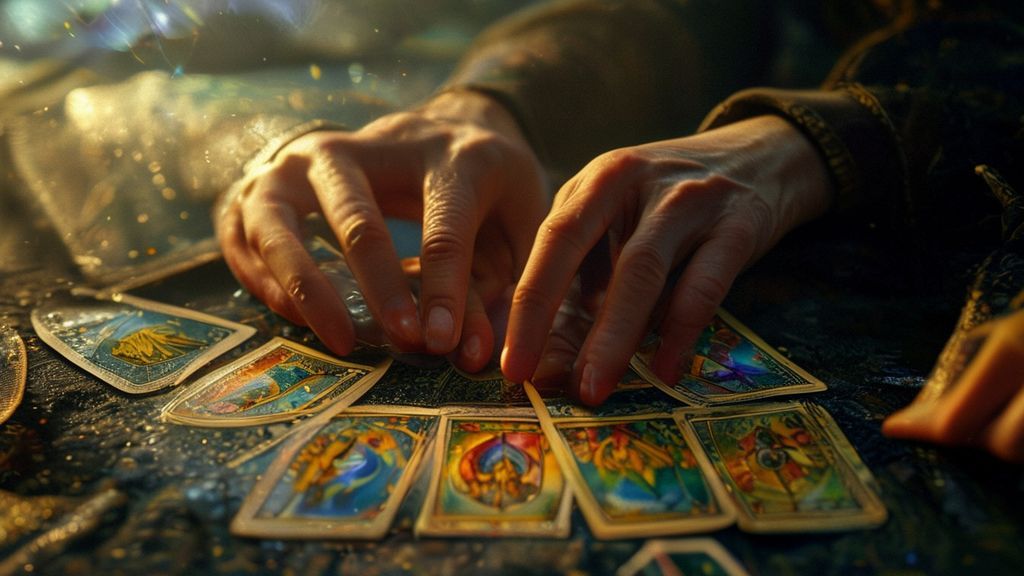
The Developer’s Perspective: Can an Ancient Deck Run a Psychological Script?
We live in an era dominated by clean data, predictive algorithms, and strict mathematical logic. Yet, when faced with massive, unpredictable life shifts—like a sudden career pivot, an emotional relationship crossroads, or the sheer anxiety of the unknown—our analytical minds often hit a wall. While modern life demands quantitative metrics, we naturally crave a deeper framework to map our subconscious patterns. If you are drawn to the concept of intuitive guidance but remain deeply skeptical of its mystical claims, you are not alone. Most people dismiss Tarot card reading as unscientific fortune-telling. However, as an engineer who deals with code and logical systems, I view Tarot through a completely different lens: it functions less like magic and more like a beautifully organized psychological mirror and an ancient system of pattern recognition.
What Exactly is Tarot? Deconstructing the Architecture of the Deck
Stripped of its occult mystique, Tarot card reading is a highly structured form of cartomancy utilizing a fixed architecture of 78 distinct inputs (cards). Unlike a standard 52-card playing deck, this framework is specifically engineered to categorize archetypal human experiences, core psychological phases, and day-to-day operational challenges. When executing a reading, these variables are randomized (shuffled) and mapped onto a predetermined layout or matrix known as a "Tarot spread." Each coordinate in the spread assigns a specific temporal context—such as foundational past variables, immediate present execution limits, or projected future outcomes. Think of it not as an inescapable destiny script, but as a dynamic trend analysis or a psychological weather forecast that maps variables based on your current choices.
The Anatomy of the Deck: Macro Trends vs. Micro Operations
A standard 78-card deck is systematically split into two primary datasets: the Major Arcana and the Minor Arcana. Understanding this structural division is the first crucial step to reading the patterns effectively.
The Major Arcana: Core System Architecture (22 Cards)
The 22 cards of the Major Arcana act as the macro-level themes of human experience. Think of these as the major software updates or foundational shifts in your life. They chronicle a chronological journey from a blank slate of innocence (The Fool) through inevitable trials, culminating in ultimate system completion (The World). When these cards appear in a reading, they signal powerful, systemic shifts and overarching forces that define your long-term character development. They deal with destiny, major life chapters, and spiritual awareness.
The Minor Arcana: Daily Executables (56 Cards)
While the Major Arcana handles the high-level architecture, the 56 cards of the Minor Arcana process the micro-transactions of everyday life—the routine challenges, passing thoughts, and temporary emotional states. They are divided into four specific suits, functioning much like the core categories in a task-management system. When Minor Arcana cards dominate a layout, the issues at hand are usually highly manageable and require immediate, actionable steps.
Decoding the Four Suits: Measuring Life's Variables
Just as we use specific mathematical tools to measure different aspects of life, each Tarot suit measures a specific behavioral metric. Here is the logical breakdown:
- Wands (Execution & Drive): Corresponds to the element of Fire. This suit measures your career ambition, creativity, and the raw energetic output required to execute new projects and take action.
- Cups (Emotional Intelligence & UI of Life): Corresponds to the element of Water. This suit dictates the flow of personal connections, intuition, and emotional well-being. Pro Tip: If your reading is heavily dominated by Cups, indicating a focus on partnership dynamics, you can cross-reference those emotional insights with objective data using our Love Compatibility Calculator to test the foundational strength of the relationship.
- Swords (Logic & Conflict Resolution): Corresponds to the element of Air. This suit focuses on intellect, raw truth, communication, and the mental blockages or conflicts that need strategic resolution.
- Pentacles (Asset Management & Stability): Corresponds to the element of Earth. This suit tracks material wealth, financial planning, work routines, and physical resources. Pro Tip: When Pentacles dominate, your focus should shift to practical wealth building. This is the perfect time to run your numbers through our Compound Interest or SWP Calculators to ensure your material assets are growing optimally.
Mastering the Layouts: Data Mapping and Spreads
Without a specific layout (or "spread"), drawn cards are just random data points. A spread acts as the structural framework or flowchart that assigns meaning to a card based on its position.
1. The Three-Card Spread: Basic Trend Analysis
This is the most efficient layout for quick, direct inquiries. It operates like a simple timeline projection:
- Position 1 (The Past): The foundational code or historical variables that created your current situation.
- Position 2 (The Present): The immediate operational challenge or core energy you are dealing with right now.
- Position 3 (The Future): The projected output if your current trajectory remains unchanged.
2. The Celtic Cross: The Deep Diagnostic
When a system is completely stuck or a major life decision is looming, professionals use the 10-card Celtic Cross. This acts as a comprehensive diagnostic tool. It maps out everything from your immediate subconscious blockages (Card 2: The Obstacle) to your external environment (Card 8) and your ultimate potential outcome (Card 10), providing a fully fleshed-out analytical report of your situation.
Debugging Reversals and Contextual Narrative
What happens when a card appears upside down (reversed)? In a logical framework, a reversed card is not a "curse"—it is simply an indicator of a system blockage, a delayed timeline, or internalized energy. For instance, the upright Nine of Pentacles represents financial independence. Reversed, it flags a warning about poor financial discipline or feeling trapped in the corporate grind. Furthermore, reading Tarot requires analyzing the entire sequence. If the 'Lovers' card is followed by the 'Five of Swords' (conflict), it indicates that a partnership decision will likely require difficult, strategic conflict resolution. Look for the dominant pattern—if one suit dominates the output, that is where your immediate focus must go.
Frequently Asked Questions (A Rationalist’s Guide)
Q: Can Tarot accurately predict fixed future events?
A: No. Tarot does not hardcode your destiny. It acts as a trend analysis tool based on your current inputs. Your free will and immediate actions can alter the final output at any time.
Q: Is it safe and effective to read for yourself?
A: Yes, reading for yourself is an excellent way to audit your own emotional state. However, the human brain tends to be biased. Using strict spreads helps you maintain objectivity so you don't just see the output you desire.
Q: What does it mean if the exact same card keeps appearing?
A: Statistically, drawing the exact same card repeatedly from a 78-card deck is a massive anomaly. It is a clear psychological flag that the specific lesson or roadblock represented by that card is critical and requires immediate troubleshooting.
Final Conclusion: Compiling Your Life’s Code
Tarot card reading is far more than mystical fortune-telling; it is an organized framework of psychology, philosophy, and practical pattern recognition. By understanding the macro forces (Major Arcana) and the micro execution steps (Minor Arcana), you gain unparalleled clarity on the hidden dynamics driving your life choices.
However, true success requires balancing this intuitive clarity with hard logic. Once Tarot helps you identify the emotional roadblocks or highlights the need for career and relationship changes, it is time to run the actual numbers. Whether you need to test the numerical compatibility of a relationship or calculate the compound interest required for your early retirement, utilize the analytical tools available here on Multicalc.in to build a future based on both intuition and mathematical certainty. Take control of your variables today!
